Learning using the Empathetic Imagination.
"For many years my heart demanded a crystal ball from us
And desired from a stranger what itself had" (Hafez)
Children, when they first enter school, are remarkably adept empathizers. They learn to be attentive to the presence, interests and concerns of their classmates, which is the central quality of children that makes a classroom possible.
But a young child's empathetic ability is not limited simply to empathizing with those around them. A child does not find it improper but natural to empathize with the isolated tree in the city and personify it by feeling for its loneliness, or to use his or her empathetic imagination to connect with the personality of the number 2, or even the personality of the infinite.
The world of the empathetic imagination, native to a young child, is where immediate experience, intellectual concepts like science and mathematics, art, and empathy unite: where everything takes on a personal and symbolic character. It is the world closest to the world of the poet or artist: the world where knowledge, rather than detached from us, obtains meaning.
With the rise of artificial intelligence, it becomes imperative to understand what makes human intelligence human, and to design a STEAM curriculum to prepare our children for a future in which they can coexist and thrive alongside artificial intelligence.
Thus, in the age of AI, we need to help our students to become not just more scientific, but also more empathetic, more artistic, and thus more human. With a K-12 STEAM curriculum, where E stands for Empathy, and a rich computational environment focused on development of the empathetic imagination, we can do just that, and furthermore finally allow teachers to utilize their natural empathetic impulses throughout the entire K-12 curriculum.
E-mail: info@empathet.com
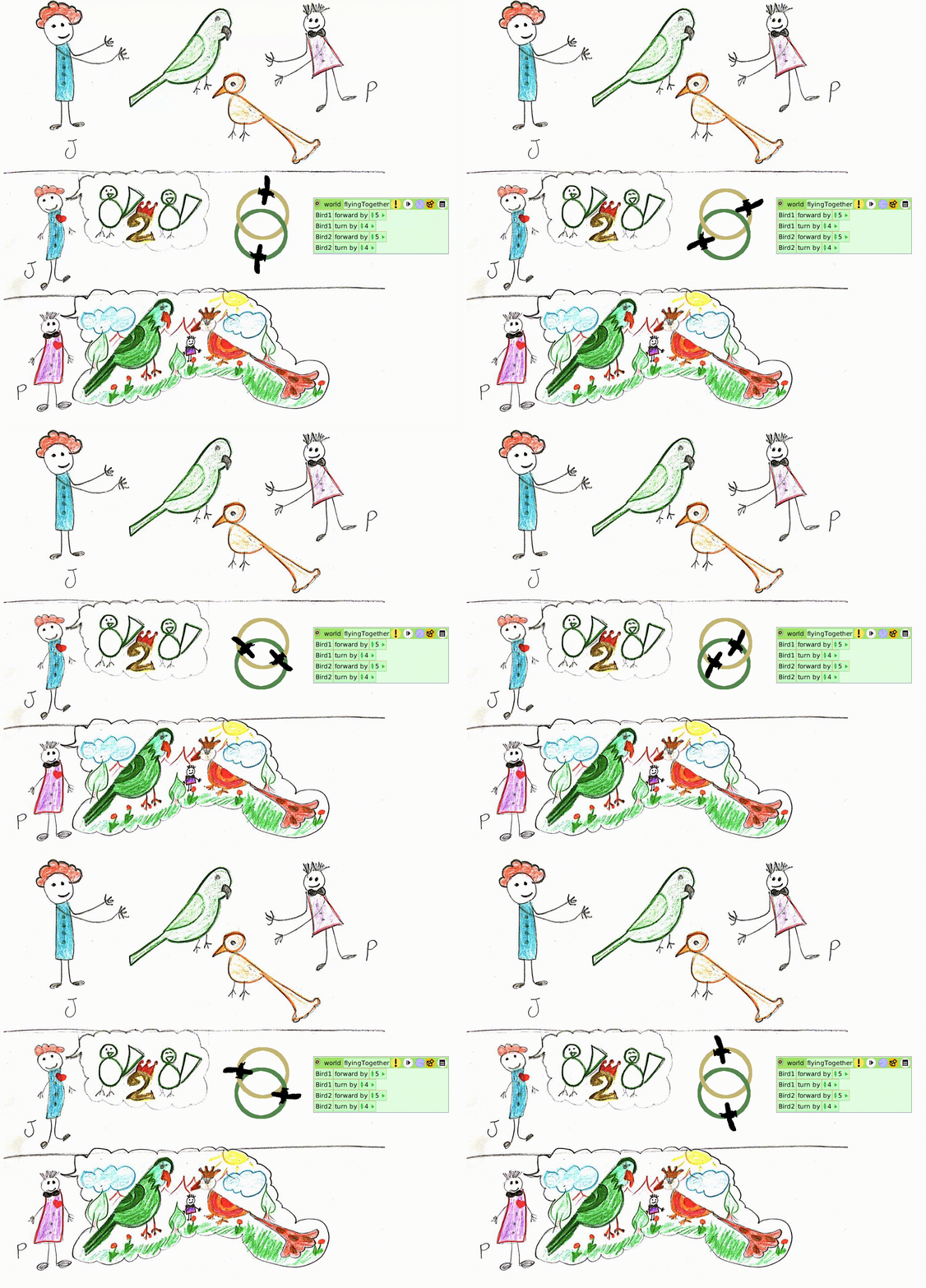
 Top: C. (grade 3) empathizing with two imaginary friends 'mathy' J. and 'literary' P by describing what each of them see and feel when they see the same two birds.
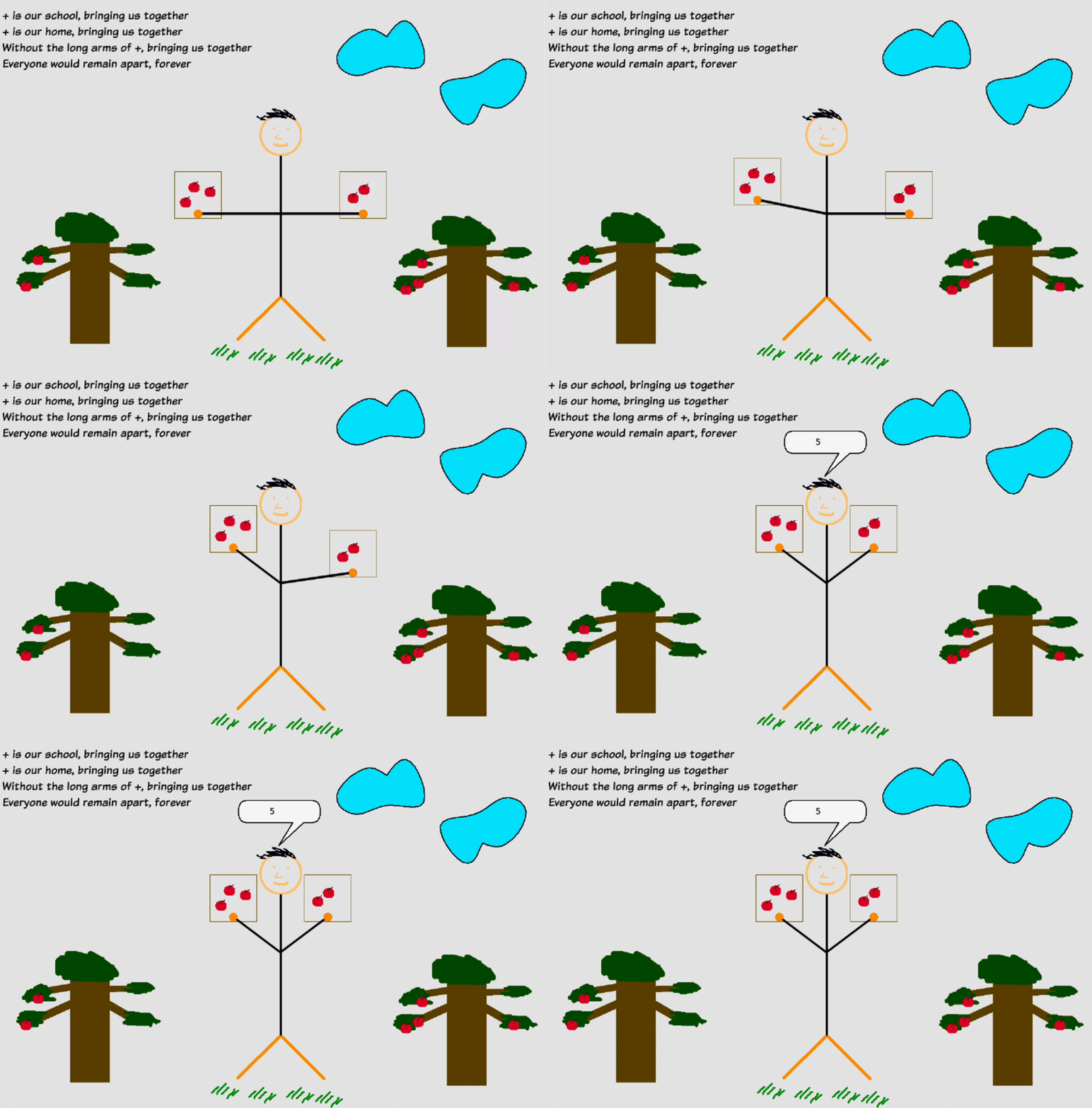
 Bottom: G. (grade 1) empathizing with 'Add Man.'